Introduction
“AI content is transforming how websites stay optimized and relevant.”
Then continue with your original first sentence. In today’s fast-paced digital world, keeping your website content fresh, relevant, and optimized for search engines is no longer optional—it’s essential. Search engines like Google prioritize websites that consistently provide updated, high-quality content, while users expect accurate and engaging information every time they visit. For many website owners, content updates and SEO optimization can feel like a never-ending task. Manually reviewing pages, updating meta tags, adjusting internal links, and improving keyword placement often consumes hours of work each week. This is where an AI content SEO workflow can transform the way you manage your website.
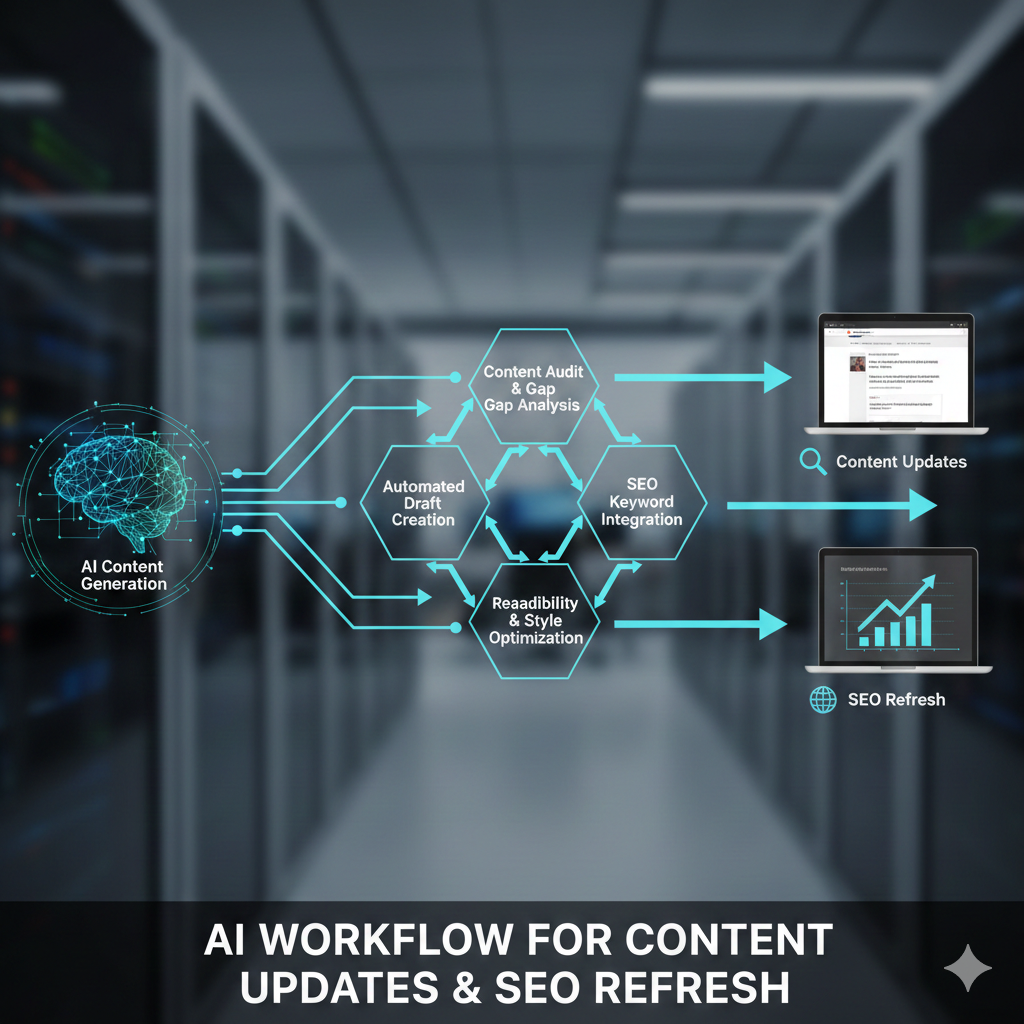
An AI-powered approach streamlines content updates and SEO refreshes by automating repetitive tasks, identifying optimization opportunities, and providing actionable recommendations based on real-time data. Instead of relying solely on intuition or manual checks, you can use AI tools to analyze your existing content, discover gaps in keyword coverage, and generate strategies that align with current search trends. By implementing a structured workflow, website owners, digital marketers, and content creators can significantly reduce effort while improving organic search visibility.
One of the key advantages of using an AI workflow for content updates is the ability to prioritize tasks intelligently. Not all pages require the same level of attention, and AI can quickly identify which articles need immediate updates to maintain search rankings. For example, it can detect outdated statistics, broken links, low-performing keywords, or under-optimized meta descriptions, providing a clear roadmap for content refresh. Additionally, AI can suggest new internal linking opportunities, ensuring that traffic flows efficiently between pages, which not only improves user experience but also strengthens SEO signals across your site.
The refresh mindset: Update with restraint
Before touching a page, answer two questions:
Is the page still aligned with search intent?
Is the page incomplete, outdated, or unclear relative to current SERPs?
If the answer is “no” to both, don’t refresh.
Stage 1: Page triage (deciding what to refresh)
Goal: Prioritize pages with the highest upside.
AI assists by
Comparing current page content with page-1 competitors
Flagging outdated sections or missing subtopics
Identifying changes in PAA questions
Prompt example
“Compare this page to current top results for [query]. List outdated sections, missing angles, and opportunities for clarification.”
Human decides
Refresh vs rewrite vs leave untouched
Scope of changes (minor, moderate, major)
Stage 2: Intent re-confirmation (critical checkpoint)
Goal: Ensure intent hasn’t shifted.
Quick SERP checks
Are ads now present?
Are titles more transactional or informational?
Are tools replacing guides?
If intent shifted, the refresh must reposition, not patch.
[Expert Warning]
Refreshing content without re-checking intent is the fastest way to lose rankings.
Stage 3: Refresh brief creation (micro-brief)
Goal: Lock what changes—and what doesn’t.
AI drafts
Sections to update
New FAQs to add
Data points to verify
Human finalizes
Sections to keep untouched
New experience-based examples
Claims that require sources
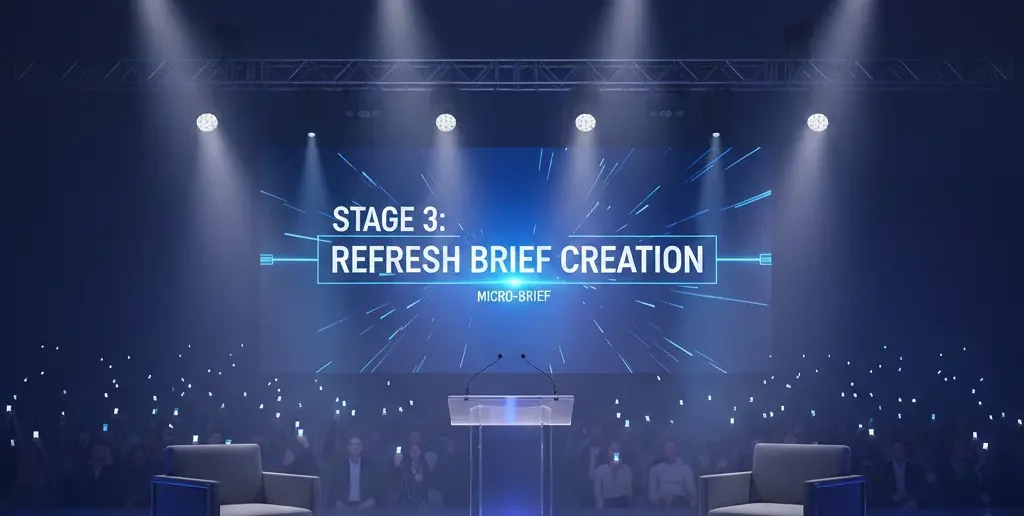
Table: Micro-brief snapshot
| Element | Action | Notes |
| Intro | Light update | Keep intent |
| Core section 2 | Rewrite | Outdated |
| Examples | Add | Experience |
| FAQs | Expand | New PAA |
Stage 4: Targeted updating (surgical edits)
Goal: Improve usefulness without destabilizing the page.
AI is best for
Rewriting outdated paragraphs
Adding clarity to dense sections
Drafting new FAQ answers
Humans handle
Tone consistency
Accuracy and nuance
Final wording for key claims
Beginner mistake: full rewrites.
Fix: update only what moved the needle.
Unique section — Real-world refresh case snapshot
In one refresh sprint, 14 posts were reviewed:
6 left untouched
5 lightly updated
3 moderately refreshed
After 6 weeks:
No traffic loss on untouched pages
2 refreshed posts entered top-3
Average time-on-page increased
The win came from selectivity, not volume.
Stage 5: Information Gain injection
Goal: Add value competitors still lack.
AI comparison
Summarize common points across top pages
Highlight repeated phrasing and gaps
Human adds
New examples
Limitations and edge cases
Updated process steps
This is where refreshes outperform rewrites.

Stage 6: Internal link & snippet optimization
Goal: Improve discovery and clarity.
AI suggests
Contextual internal link additions
Featured-snippet-friendly summaries
Human confirms
Links add value (not clutter)
First 40 words answer the query clearly
Common mistakes in AI-driven refreshes
Mistake 1: Updating dates only
Fix: Update substance, not cosmetics.
Mistake 2: Repeating competitor phrasing
Fix: Add original explanation or experience.
Mistake 3: Over-optimizing keywords
Fix: Prioritize clarity over density.
Information Gain: The refresh insight most guides miss
Freshness signals come from usefulness, not timestamps.
From practice, pages that add clearer explanations, better structure, and honest limitations outperform pages that simply “look newer.”
(FAQS)
How often should content be refreshed?
When intent, accuracy, or SERPs change.
Is AI safe for content updates?
Yes, with human review.
Should every page be refreshed yearly?
No—only those with upside.
Can refreshes hurt rankings?
Yes, if intent changes are ignored.
What’s the best refresh size?
Small, focused updates.
Do refreshes need new images?
Only if visuals add clarity.
Conclusion
An AI workflow for content updates and SEO refresh works when updates are intent-aware, selective, and value-driven. From real case studies, the biggest gains come from improving clarity and usefulness—not from rewriting everything.
INTERNAL LINK
External link
https://ahrefs.com/blog/content-refresh/?