Introduction
The best AI tools for research and note summarization don’t replace thinking—they reduce friction around it. Researchers, SEOs, students, and professionals are overwhelmed not by lack of information, but by too much of it. Long articles, reports, PDFs, meeting notes, and SERP data pile up faster than anyone can process.
From real-world usage, AI summarization works best when it’s treated as a first-pass filter, not a final answer. The tools that perform well today are those that help users extract structure, key points, and themes—while still leaving room for human judgment.
This guide compares AI tools for research and note summarization based on practical workflows, not hype, and explains where each tool fits—and where it falls short.
What “AI summarization” actually means in practice
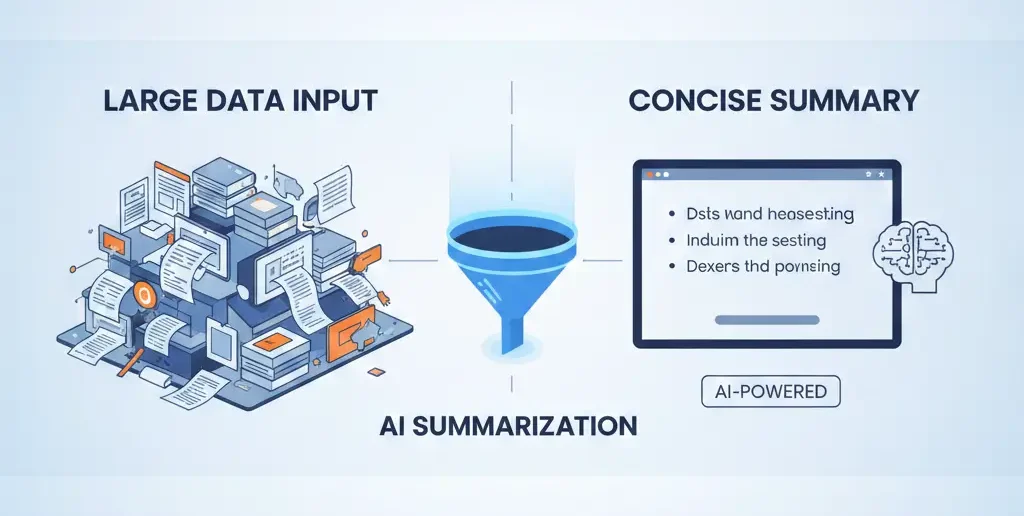
AI summarization is not a single task. It usually includes:
Condensing long text into key points
Extracting themes or arguments
Rewriting content in simpler language
Turning notes into structured outlines
What AI cannot reliably do:
Judge truth or credibility
Detect subtle bias
Replace domain expertise
Understanding this prevents over-reliance.
Categories of AI tools used for research & notes
Instead of listing tools randomly, it’s more useful to group them by function.
| Tool Category | Primary Use | Best For |
| General AI assistants | Broad summaries | Mixed research |
| Document-focused tools | PDFs, papers | Academic & reports |
| Note-centric tools | Personal notes | Meetings, learning |
| Spreadsheet AI | Pattern summaries | SEO & data review |
Different tools solve different problems.
General AI assistants (broad summarization)
These tools are flexible and handle many formats.
Strengths
Can summarize articles, notes, and lists
Easy to prompt and refine
Good for exploratory research
Limitations
May oversimplify complex topics
Require careful prompt framing
Best use case:
Early-stage research when you need orientation, not conclusions.
Document-focused AI tools (papers & PDFs)
These tools shine when working with:
Research papers
Long reports
Whitepapers
Strengths
Handle long documents better
Extract sections, quotes, and highlights
Limitations
Less flexible outside documents
Still require manual fact-checking
Best use case:
Academic or long-form professional research.
[Expert Warning]
AI summaries can sound authoritative even when they miss nuance. Always verify key claims against the source.
Note-centric AI tools (meetings & learning)
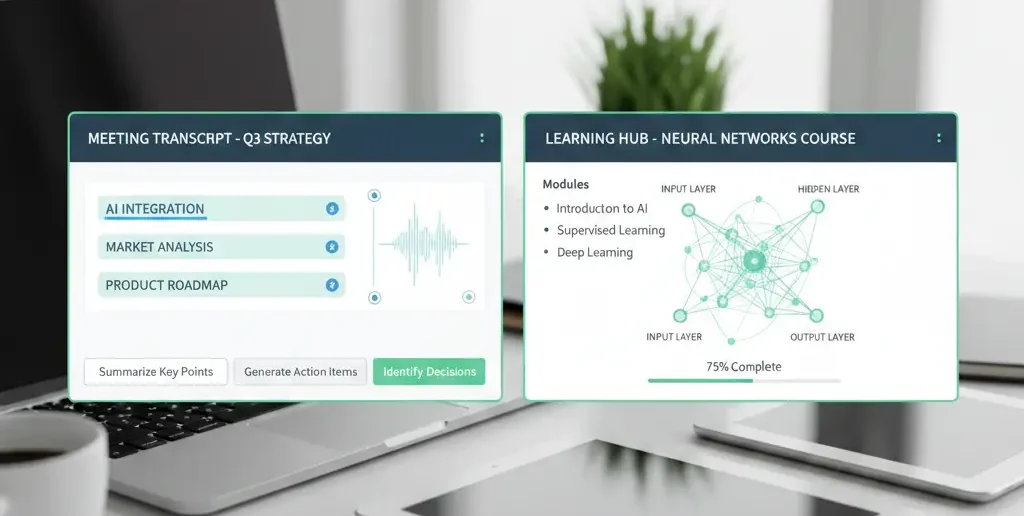
These tools integrate into:
Note-taking apps
Meeting transcripts
Study workflows
Strengths
Convert raw notes into structured summaries
Save time after meetings or lectures
Limitations
Dependent on input quality
Not ideal for deep research synthesis
Best use case:
Turning messy notes into usable outlines.
Spreadsheet-based AI (pattern interpretation)
Used inside tools like Google Sheets.
Strengths
Summarize trends across rows
Explain changes or anomalies
Great for SEO & analytics notes
Limitations
Not suitable for raw research
Needs structured input
Best use case:
Explaining data-backed insights, not reading sources.
Information Gain: What most “best AI tools” lists miss
https://www.youtube.com/watch?
Here’s a SERP gap worth highlighting:
The best AI tool depends more on input type than tool popularity.
Most comparison articles rank tools by brand awareness. In practice, success depends on matching:
Tool → input format
Output → intended use
A simple mental model:
Long PDFs → document AI
Messy notes → note AI
Mixed web content → general AI
This matching logic is rarely explained, yet it prevents frustration.
Unique section — Myth vs Reality
Myth: One AI tool can handle all research and summarization
Reality: Different tools excel at different stages of thinking
From experience, using two complementary tools often produces better results than forcing one tool to do everything.
Common mistakes when using AI for research summaries
Mistake 1: Accepting summaries as final truth
Fix: Treat summaries as drafts, not conclusions.
Mistake 2: Feeding unstructured input
Fix: Clean notes before summarizing.
Mistake 3: Ignoring what was left out
Fix: Ask AI what it may have missed.
Practical prompts for better research summaries
Prompt: Bias-aware summary
“Summarize this text and list any assumptions or areas that may need verification.”
Prompt: Action-focused summary
“Summarize this content into key takeaways and open questions.”
These prompts improve usefulness without increasing length.
(FAQs)
Are AI summaries reliable for research?
They’re helpful, but require verification.
Can AI summarize academic papers?
Yes, but nuance may be lost.
Is one tool enough for all research?
Usually no—different tools serve different tasks.
Can AI detect bias?
Only partially. Human judgment is required.
Are AI summaries SEO-safe?
Yes, when reviewed and rewritten.
What’s the best way to use AI summaries?
As a starting point, not an endpoint.
Conclusion
The best AI tools for research and note summarization are those that reduce cognitive load without replacing critical thinking. From real experience, success comes from choosing tools based on input type, reviewing outputs carefully, and keeping humans in control of conclusions.
Used wisely, AI turns information overload into structured understanding.