Introduction
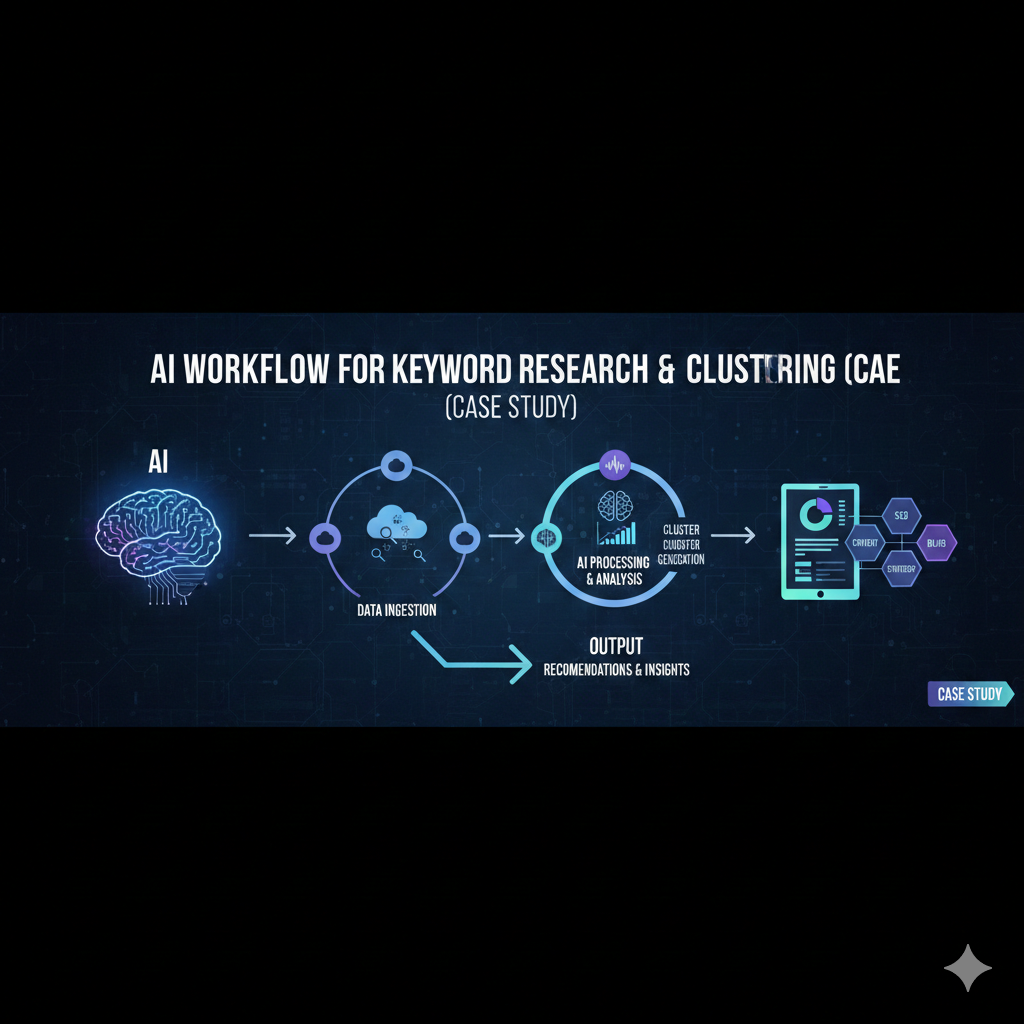
In today’s fast-paced digital landscape, effective keyword research is no longer about generating the largest possible list of search terms. Many teams fall into the trap of using AI to explode a handful of seed keywords into thousands of variations, only to end up overwhelmed and unsure which terms truly deserve content attention. This flood of keywords often creates more noise than actionable insight, leaving content creators paralyzed by choice. Real success in keyword research comes not from quantity, but from clarity—understanding user intent, compressing complexity, and turning raw search data into a content strategy that drives results.
AI offers an unprecedented advantage in this process, but only when applied strategically. The real power of AI in keyword research is its ability to accelerate discovery, reveal patterns, and highlight semantic relationships that might take humans hours to identify manually. However, AI alone cannot make the judgment calls required to produce meaningful content plans. Human oversight is essential to define boundaries, resolve ambiguity, and ensure that each keyword cluster translates directly into a publishable page with a clear purpose. The combination of AI efficiency and human discernment is the secret behind scalable, high-performing content strategies.
The guiding principle: Fewer clusters, clearer intent
Before tools, define success:
Each cluster answers one primary question
Each page has one dominant intent
Clusters map cleanly to site architecture
If a cluster can’t be explained in one sentence, it’s too broad.
Stage 1: Seed expansion without keyword inflation
Goal: Discover angles, not volume.
AI’s role
Expand seeds into related questions
Surface synonyms and phrasing users actually use
Identify modifiers (who, where, why, how)
Prompt example
“Expand [seed topic]into user questions and problem-focused phrases. Avoid duplicating phrasing.”
Human role
Remove near-duplicates
Discard terms dominated by brands or tools
Keep only phrases that imply a content need
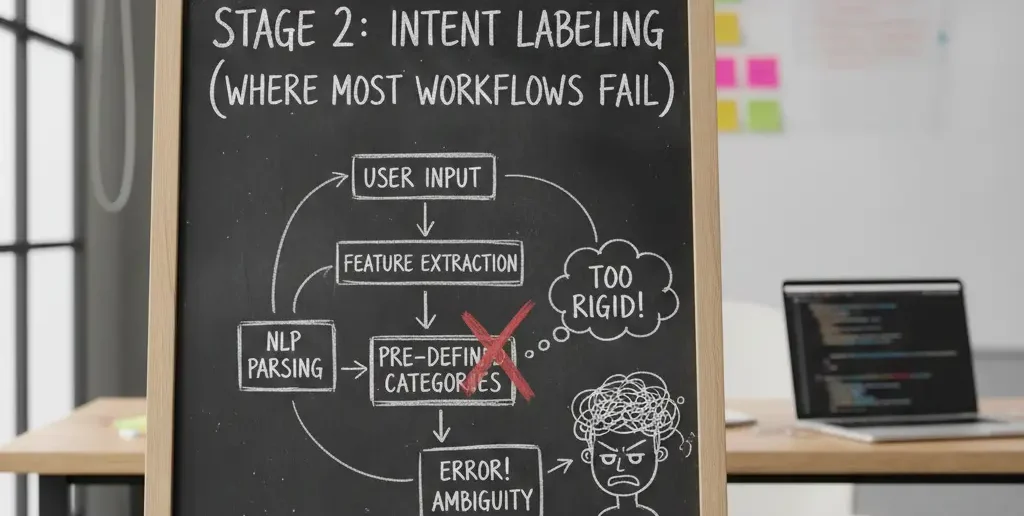
Stage 2: Intent labeling (where most workflows fail)
Goal: Prevent mixed-intent pages.
AI tasks
Label intent (informational / commercial / navigational)
Flag ambiguous phrases
Human decisions
Resolve ambiguity by SERP scanning
Decide whether ambiguity deserves a separate page
Quick intent check
Ads present? Likely commercial
Guides and blogs? Informational
Tools and logins? Navigational
[Expert Warning]
Clustering before intent labeling almost guarantees cannibalization.
Stage 3: Semantic clustering with guardrails
Goal: Group by meaning, not shared words.
AI clustering rules
Group phrases that answer the same question
Explain why each keyword belongs in a cluster
Suggest a primary phrase per cluster
Human validation
Reject clusters that mix outcomes
Split clusters that feel “forced”
Rename clusters in plain language
Table: Example cluster outcome
| Cluster Name | Primary Intent | Content Type |
| Beginner workflow | Informational | Guide |
| Tool comparison | Commercial | Comparison |
| Process templates | Informational | Tutorial |
Stage 4: Cluster-to-content mapping
Goal: Turn clusters into publishable plans.
AI helps by
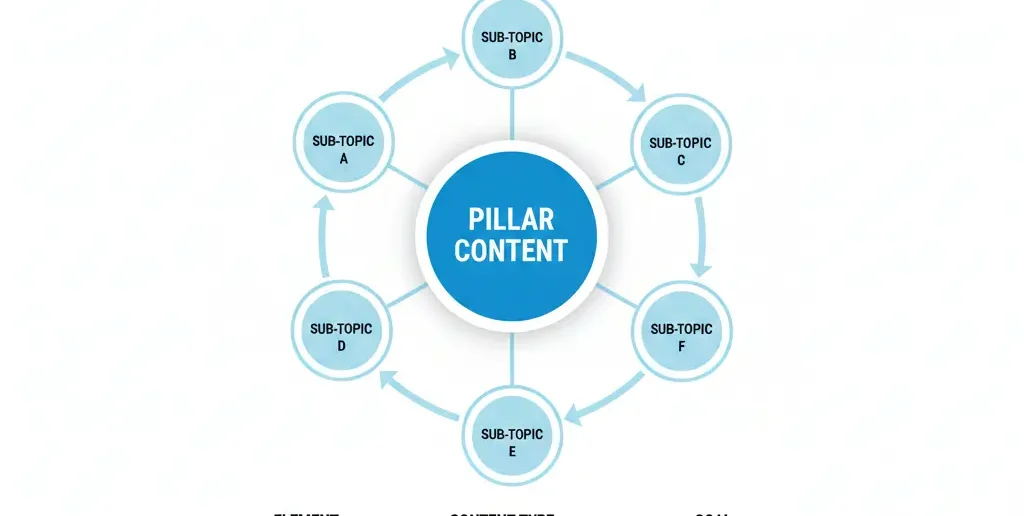
Suggesting pillar vs supporting roles
Proposing internal link paths
Humans finalize
Page scope and promises
What not to cover on each page
Beginner mistake: one cluster = one article.
Fix: Some clusters become sections, not posts.
Unique section — Real-world case snapshot
In a recent content build, a dataset of ~1,800 keywords was reduced to 22 actionable clusters in under two days by:
Aggressive deduplication
Intent-first clustering
Human-led cluster naming
The outcome wasn’t “more coverage”—it was clearer coverage, and publishing velocity doubled without quality loss.
Stage 5: Information Gain check (SERP gap pass)
Goal: Ensure clusters deserve content.
AI comparison
Summarize top 3 ranking pages per cluster
List repeated angles vs missing points
Human adds
Experience-based nuance
Edge cases competitors ignore
Clear limits and trade-offs
If no gap exists, deprioritize the cluster.
Common mistakes in AI-driven keyword clustering
Mistake 1: Chasing long-tail volume
Fix: Prioritize intent clarity over length.
Mistake 2: Overlapping clusters
Fix: Enforce one-question-per-cluster rule.
Mistake 3: Renaming clusters with keywords
Fix: Use human-readable names first.
Information Gain: The clustering insight most guides miss
Cluster naming determines content quality.
From practice, clusters named after outcomes (“How to choose…”, “What to expect…”) produce better articles than clusters named after keywords. Naming forces clarity.
(FAQs)
Can AI replace keyword research tools?
No. It complements them.
Should clusters be small or large?
Small enough to answer one question.
How many keywords per cluster?
As many as share the same intent.
Is manual review required?
Yes—always.
Does this workflow scale?
Yes, with clear guardrails.
When should clusters be split?
When intent diverges.
Conclusion
An AI workflow for keyword research and clustering succeeds when it reduces decision fatigue and turns data into clear content choices. From real projects, the biggest wins come from intent-first grouping, human-readable cluster names, and ruthless prioritization.
Internal link
AI Content SEO Workflow: Update Content & Boost Rankings”
External link
https://aidcanvas.com/index.php/2026/01/09/ai-workflow-for-keyword-research-clustering-case-study/?